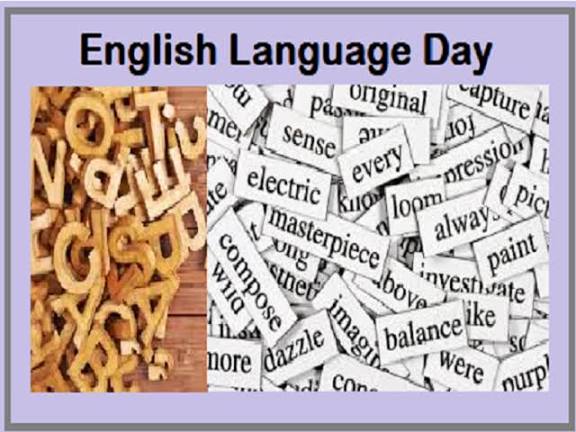
On April 23rd, the world marks English Language Day—a chance to explore the development, history, and culture of a tongue that now connects 1.5 billion people.
The date isn’t random. April 23 is traditionally observed as both the birthday and death day of William Shakespeare, the writer who stretched English further than anyone before or since. It’s also the UN’s official day to celebrate multilingualism, with English joining Arabic, Chinese, French, Russian, and Spanish as UN working languages.
1. Where English came from: Invasion, fusion, invention
English wasn’t born in a palace. It was built in muddy fields by invaders, traders, and monks.
5th–6th centuries: Anglo-Saxon tribes bring Germanic dialects to Britain. “Old English” sounds more like German than modern English. _Beowulf_ is written.
1066: The Norman Conquest imports French. For 300 years, English kings speak French, peasants speak English. The language absorbs 10,000+ French words: _justice, parliament, beef, pork_.
1400s–1600s: Latin and Greek flood in through the Church and Renaissance. _Science, education, library, democracy._ Printing presses fix spelling and spread books.
1600s–1900s: British trade and colonization carry English to North America, India, the Caribbean, Africa, Australia. It picks up words everywhere: _shampoo_ from Hindi, _safari_ from Swahili, _kangaroo_ from Guugu Yimithirr.
English became a language of layers—German bones, French silk, Latin muscle, global vocabulary.
2. Why English rules today: Not because it’s “best"
English is the most spoken language globally, but here’s the twist: only about 1 in 4 speakers are native. For 75%, it’s a second, third, or fourth language.
Fact Why it matters
1.5B+ speak English is the default language of aviation, science, shipping, and the internet. 60% of online content is in English.
67 countries have it as an official language From Nigeria to India to Singapore, English became a neutral link between ethnic groups post-colonization.
#1 for business Contracts, tech manuals, and academic papers default to English. “Business English” is its own dialect.
Pop culture engine Hollywood, Afrobeats collabs, K-pop lyrics, Nollywood subtitles—English spreads through entertainment before textbooks.
It wasn’t elegance that made English dominant. It was empire, then American economics, then the internet. Power gave it reach. Simplicity helped it stick—no genders for nouns, relatively easy plurals, and a habit of stealing useful words instead of inventing new ones.
3. The cost of a global tongue
1. Linguistic inequality: Kids in Kenya, Pakistan, or Malaysia often need English to access higher education and jobs, even if their parents don’t speak it. That creates class divides.
2. Language loss: As English rises, smaller languages fall. UNESCO says one language dies every 2 weeks. English isn’t killing them directly, but globalization is.
3. “Whose English?” debate: Is Nigerian Pidgin proper English? Is Indian English “broken”? English Language Day forces us to admit: nobody owns it anymore. There are World Englishes now—plural.
4. English in Africa: Complicated, but ours too
Across Africa, English is both colonial scar and modern tool.
- Nigeria: English is the official language uniting 500+ local tongues. But Pidgin English is the real street language, with its own grammar, proverbs, and music.
- Kenya & Uganda: “Sheng” and “Uglish” mix English, Swahili, and local words. Young people code-switch 5 times in one sentence.
-South Africa: 11 official languages, but English dominates courts and business. The fight is to keep mother tongues alive while using English to compete globally.
Africa isn’t just consuming English. It’s remaking it. From _japa_ to _soro soke_, African English adds words the Oxford Dictionary now tracks.
5. How to celebrate April 23
1. Read the bridge-builders: Pick up Chinua Achebe, Chimamanda Ngozi Adichie, or Wole Soyinka. They used English to tell African stories the world couldn’t ignore.
2. Learn a new English: Watch a Nigerian, Jamaican, or Indian film without subtitles. Note the slang. That’s English evolving in real time.
3. Write your own line: Shakespeare added 1,700 words to English. What word from your language should English borrow next?
4. Teach someone: If English opened doors for you, spend 30 minutes on April 23 helping someone else practice. Literacy is still the biggest barrier to opportunity.
5. Celebrate your first language too: English Language Day is part of the UN’s push for multilingualism. Speak your mother tongue proudly. English is a tool, not a replacement.
The bottom line
English started as a dialect spoken by a few thousand farmers. Today it’s the language of air traffic control, scientific research, memes, and UN resolutions.
For three-quarters of its speakers, it’s an adopted language—learned for school, work, or survival. That makes English less of a flag and more of a bridge.
On April 23, we don’t just celebrate Shakespeare. We celebrate every market trader in Accra switching to English to close a deal, every coder in Abuja writing Python in English, every Afrobeats artist slipping English into Yoruba verses.
English Language Day isn’t about perfection. It’s about connection. And the story of how a small island’s tongue became the world’s second language is still being written—by all of us.


0 Comments